OPC Registration Online: Time, Fees, and Process Explained
The digital revolution in India’s regulatory framework has made it increasingly feasible for solo entrepreneurs to formalize their business ventures. Among the various structures available, the One Person Company (OPC) stands out as a premier choice for individuals who seek the benefits of a corporate identity without the necessity of bringing in additional partners. Transitioning from an unorganized setup to a registered OPC is a strategic move that involves specific timelines, statutory costs, and a multi-stage procedural journey through the Ministry of Corporate Affairs (MCA).
The Strategic Value of the OPC Structure
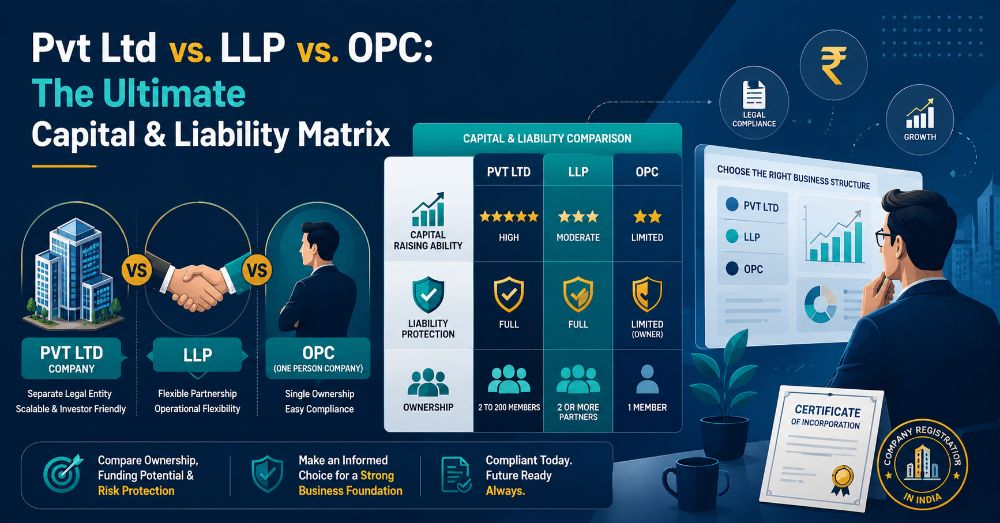
Before diving into the mechanics of registration, it is essential to understand why this model is favored by modern consultants, digital creators, and small-scale manufacturers. An OPC provides a "Separate Legal Entity" status, meaning the company can own property, incur debt, and sue or be sued in its own name. For a small business owner, this creates a vital wall of protection between personal savings and business liabilities. Furthermore, the "Company" suffix adds an immediate layer of professional credibility that helps when bidding for corporate contracts or applying for MSME-specific government tenders.
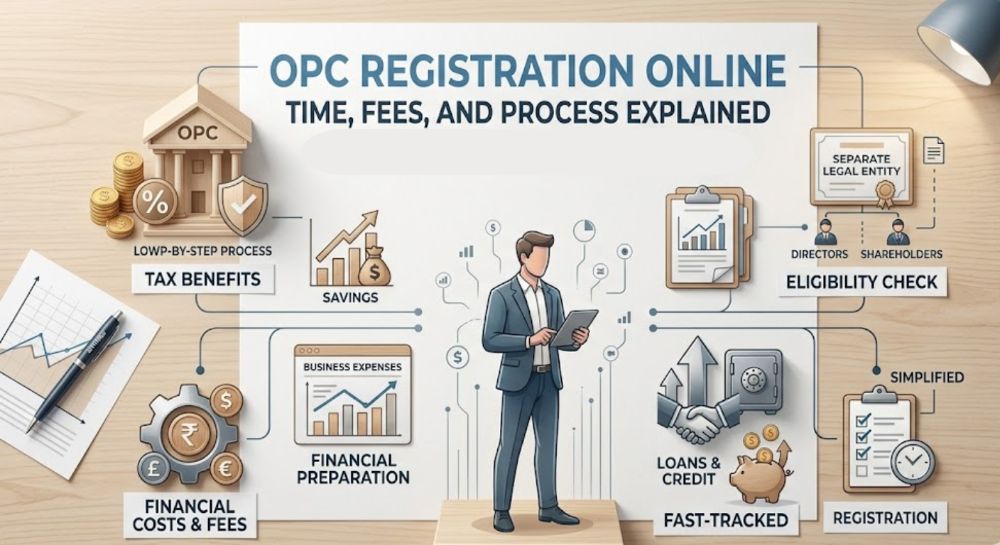
The online registration process is designed to be centralized and paperless, primarily handled through the SPICe+ (Simplified Proforma for Incorporating Company Electronically Plus) portal. This integrated web form has consolidated several previously independent processes, such as obtaining a Director Identification Number (DIN) and a Permanent Account Number (PAN), into a single streamlined workflow.
Step-by-Step Incorporation Journey
The process begins with the acquisition of a Digital Signature Certificate (DSC). Since the entire application is digital, the promoter and the nominee must have a valid DSC to authenticate the electronic forms. Once the digital signature is ready, the next phase is "Name Reservation." Choosing a unique name is often the most time-consuming part for entrepreneurs. The name must not only be original but must also end with the suffix "(OPC) Private Limited."
Following name approval, the entrepreneur moves to the core filing of the SPICe+ form. This involves drafting two critical documents: the Memorandum of Association (MoA) and the Articles of Association (AoA). The MoA defines the company’s objectives and the scope of its operations, while the AoA outlines the internal rules and management regulations. Because an OPC requires a "Nominee" to take over in the event of the member's death or incapacity, a formal consent from the nominee (Form INC-3) must also be uploaded during this stage.
- Documentation Requirements: The applicant must provide proof of identity and address (such as an Aadhaar card or Passport), PAN card details, and proof of the registered office address (such as a utility bill or a No Objection Certificate from the landlord).
- The Final Approval: Once the Registrar of Companies (ROC) scrutinizes the application and finds it compliant with the Companies Act, 2013, a Certificate of Incorporation is issued. This certificate includes the Corporate Identity Number (CIN) and marks the official "birth" of the business as a legal entity.
Understanding the Financial Commitment
The cost of OPC registration is not a single flat fee but a combination of government charges, professional fees, and stamp duties. The government fee is largely dependent on the "Authorized Capital" of the company, the maximum amount of share capital the company is authorized to issue. For many small businesses, starting with a lower authorized capital helps minimize the initial registration costs.
Aside from the MCA filing fees, entrepreneurs must account for stamp duty, which varies significantly from one state to another. For instance, registering a company in Maharashtra or Delhi may incur different stamp duty charges compared to Karnataka or Tamil Nadu. Additionally, the cost of obtaining DSCs for the director and the nominee, as well as the professional fees for a Chartered Accountant, Company Secretary, or legal consultant to verify and certify the documents, must be factored into the total budget. Generally, a comprehensive budget for an OPC registration can range from 7,000 to 15,000 INR, depending on the state of incorporation and the complexity of the filing.
Timelines for Modern Incorporation
Efficiency is a hallmark of the current MCA21 system. If all documents are in order and the chosen name is unique and compliant, the entire process from obtaining the DSC to receiving the Certificate of Incorporation usually takes between 10 and 15 working days. However, this timeline can be extended if the Registrar asks for clarifications (resubmissions) or if there are delays in obtaining name approval.
The speed of the process is often dictated by the accuracy of the initial filing. Errors in the MoA or AoA, or providing mismatched address proofs, are common reasons for delays. Therefore, while the portal is open to everyone, many business owners prefer professional assistance to ensure the "first-time right" submission of their application. Once incorporated, the company also automatically receives its PAN, TAN (Tax Deduction and Collection Account Number), and even registration for ESIC and EPFO if applicable, further saving time on post-incorporation formalities.
Sustaining the Entity Post-Registration
Incorporation is merely the beginning of the journey. Once the OPC is registered, it enters a cycle of annual compliance that includes filing financial statements and annual returns with the ROC. While an OPC enjoys several exemptions, such as not being required to hold an Annual General Meeting (AGM), maintaining statutory registers, and completing a yearly audit are mandatory. This ensures that the financial transparency of the entity remains intact, which is crucial for maintaining the "Limited Liability" status that makes the OPC structure so attractive in the first place.
Conclusion: Empowering the Solo Founder
The transition to a One Person Company is a definitive step toward professionalizing an individual’s passion or trade. By navigating the online registration process effectively, an entrepreneur secures a legal shield, a credible brand identity, and a scalable platform for future growth. While the fees and procedural steps may seem daunting at first glance, the long-term financial and operational benefits far outweigh the initial investment of time and capital.
Start Your Success Story with Confidence
The road to entrepreneurship is exciting, but the legal paperwork shouldn't be your roadblock. At Registrationwala, we specialize in making OPC Registration seamless and stress-free. From securing your unique business name to delivering your Certificate of Incorporation, our experts handle the complexities so you can focus on your vision.