What Is a Mutual Fund? A Complete Beginner’s Guide

Mutual funds are one of the most popular investment vehicles in India, offering safety, diversification, and professional fund management. For beginners, understanding how mutual funds work can open the door to smart, long-term wealth building. This guide explains mutual funds in simple terms and also highlights important concepts such as the mutual fund distributor process, the role of a mutual fund distributor in India, and the steps involved in mutual fund distributor registration.
What Is a Mutual Fund?
A mutual fund is a pooled investment product where money from multiple investors is gathered and invested in diversified financial instruments such as stocks, bonds, government securities, and money market instruments. This pooled money is managed by professional fund managers who aim to generate returns as per the fund’s investment objective.
Mutual funds allow beginners to start investing with small amounts while receiving expert management and reduced risk.
How Do Mutual Funds Work?
When you invest in a mutual fund, you buy units of the fund. The value of each unit is known as the Net Asset Value (NAV). The NAV fluctuates based on the performance of the fund’s underlying assets.
Professional Fund Management
Every mutual fund is managed by a qualified fund manager who decides where and how much to invest. Their expertise helps beginners navigate market volatility.
Diversification Benefits
Instead of investing in a single stock or bond, mutual funds spread investments across sectors and instruments, reducing overall risk.
Affordability and Convenience
Even small investments allow participation in large, well-diversified portfolios. Investors can also redeem units anytime, providing liquidity and flexibility.
Types of Mutual Funds
Mutual funds come in various categories to suit different investment needs and risk profiles.
Equity Mutual Funds
These funds primarily invest in stocks and are ideal for long-term growth.
Debt Mutual Funds
These invest in fixed-income instruments like bonds and government securities, offering stability and predictable returns.
Hybrid Mutual Funds
These are a mix of equity and debt, providing a balance between growth and stability.
Benefits of Investing in Mutual Funds
Expert Management
Professional managers handle your investments, making mutual funds beginner-friendly.
Systematic Investment Options
Features like SIP (Systematic Investment Plan) allow beginners to invest small amounts regularly.
Transparency & Regulation
Mutual funds in India are regulated by SEBI, ensuring investor protection and clear disclosure.
How to Start Investing in Mutual Funds
Investors can start through online apps, AMCs (Asset Management Companies), or through registered distributors.
Know Your Goals
Identify whether you want growth, income, or tax savings.
Complete KYC
Complete your KYC (Know Your Customer) before investing.
Choose the Right Mutual Fund
Research fund performance, risk level, and your investment horizon.
Mutual Fund Distribution in India
Apart from investing, many individuals also explore opportunities to become a mutual fund distributor in India. This role involves helping investors choose and invest in suitable mutual funds.
Understanding the Mutual Fund Distributor Process
The mutual fund distributor process involves learning about mutual funds, passing required certification exams, and partnering with AMCs to offer funds to clients. Distributors earn commissions based on the investments made through them.
Key Responsibilities of a Distributor
- Guiding clients based on risk profile
- Assisting with investment documentation
- Providing regular portfolio updates
- Ensuring compliance with SEBI guidelines
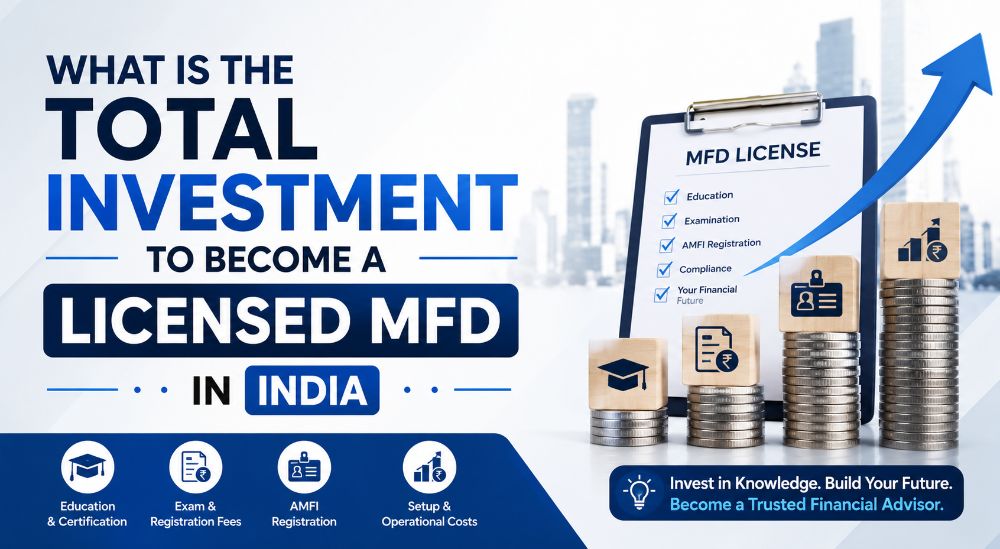
Mutual Fund Distributor Registration: Step-by-Step Guide
If you want to officially operate as a distributor, you must undergo mutual fund distributor registration. Here’s how:
Step 1 – Pass the NISM-Series V-A Certification
This exam is mandatory for anyone becoming a mutual fund distributor in India.
Step 2 – Apply for an AMFI Registration Number (ARN)
After passing the exam, apply to AMFI to receive your ARN, which identifies you as an authorized distributor.
Step 3 – Complete KYD (Know Your Distributor)
Verification of identity and documents is required under SEBI regulations.
Step 4 – Partner with AMCs or Platforms
After registration, you can partner with Asset Management Companies or distribution platforms to start offering mutual funds.
Final Thoughts
Mutual funds are a smart, accessible, and beginner-friendly investment option. They offer diversification, expert management, and long-term wealth-building potential. Whether you want to invest or become a mutual fund distributor in India, understanding the basics is the first step toward success.
Also know about:EPF Form 15G: How to Fill Form and Why